
Choosing self storage should be simple. You have items you need to store, you find a secure space, you move them in and you get on with everything else. In reality, one question can make the process feel more complicated than expected: what size storage unit do you actually need?
Choose too little space and you may find yourself trying to force furniture, tools, stock or boxes into a unit that is not practical. Choose too much and you could end up paying for space you never use. The right storage size is about more than square footage. It is about access, layout, item type, frequency of use and how long you expect to keep everything stored.
Whether you are moving house, renovating, clearing space at home, storing tools for a trade business or managing seasonal stock, this guide explains how to choose a self storage unit that works for the way you use it.
Start With What You Need to Store
Before looking at storage options, make a quick list of what needs to go into storage. This does not need to be complicated, but it should be more detailed than simply saying “furniture” or “business stock”.
Think in categories. For home storage, this could include sofas, beds, wardrobes, dining furniture, garden equipment, garage contents, boxes of books, seasonal decorations or appliances. For trades, it may include tools, fixings, materials, ladders, workbenches, power equipment or spare parts. For small businesses, it could include stock, archive files, event equipment, display stands, office furniture or packaging supplies.
Once you have a clearer list, think about which items are bulky, which can be stacked and which need to stay accessible. A few large items can take up more practical space than dozens of boxes. A sofa, mattress, filing cabinet or lawnmower may be awkward to stack around, while uniform boxes can be packed neatly and efficiently.
This is why choosing the right storage size is not just a question of volume. It is also about shape, access and how easily items can be arranged.
Understand the Difference Between Storage Space and Usable Space
A storage unit may offer a set floor area, but you should not assume every inch will be equally usable. The way you pack the unit will make a significant difference.
If you are storing items you will not need to access for several months, you may be able to pack the space tightly. This can work well for house moves, renovation projects or long-term archive storage. However, if you expect to visit regularly, remove items, collect tools or rotate stock, you will need to leave some access space.
A walkway down the centre or along one side of the unit can make the difference between useful storage and an awkward stack of items that has to be unpacked every time you need something. For business users, tradespeople and anyone storing frequently used equipment, easy access should be part of the size calculation.
In short, the question is not only “will it fit?” but “will it still be practical once it is inside?”
How Much Can a 20ft Storage Container Hold?
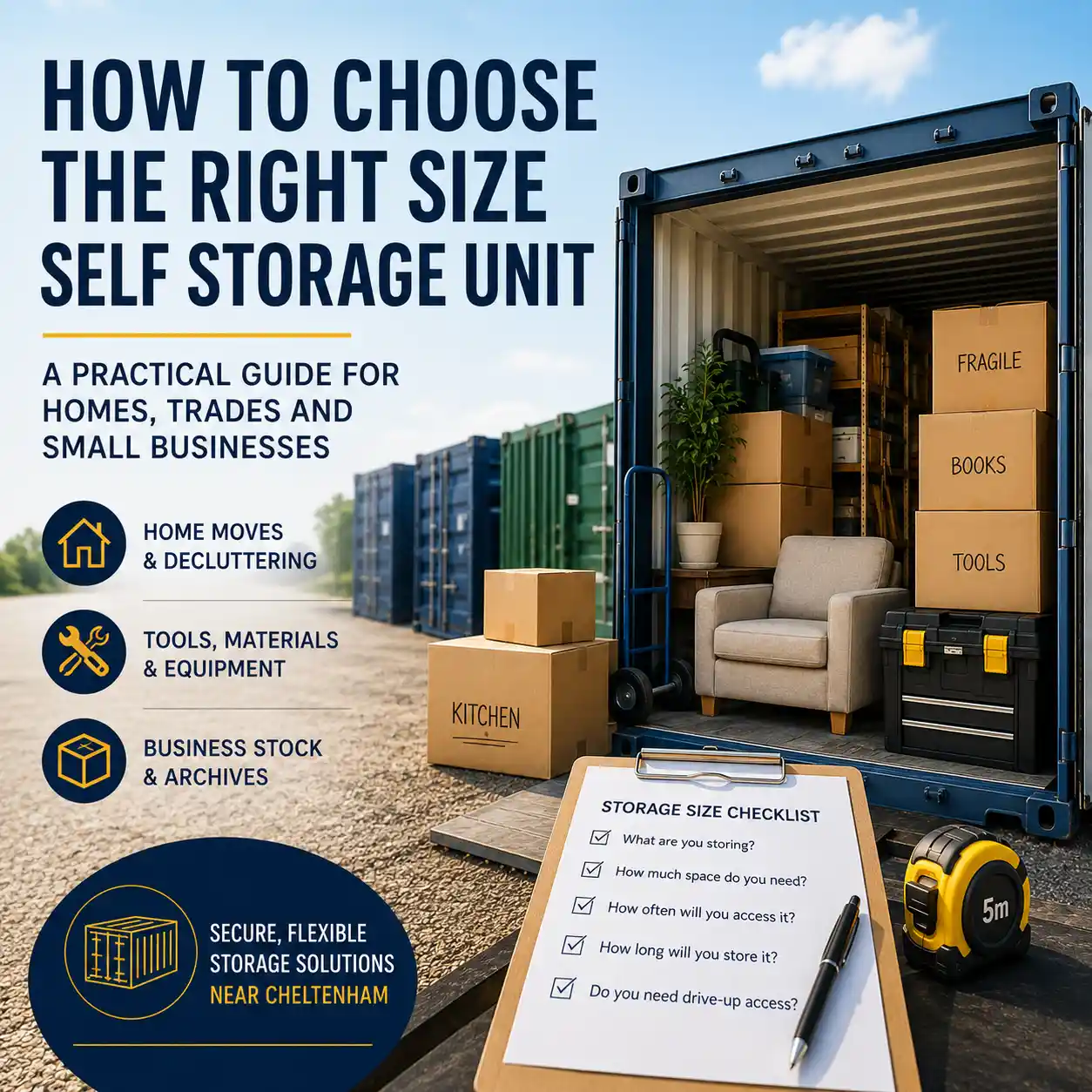
Many secure self storage facilities use 20ft containers because they offer a strong balance between capacity, convenience and direct access. A typical 20ft x 8ft storage container provides around 160 sq ft of floor space, making it suitable for a wide range of domestic, trade and business storage needs.
For household users, this can provide space for furniture, boxes, garage contents, appliances and seasonal items. It may suit people moving home, renovating, downsizing or needing temporary space while they reorganise.
For trades, a 20ft container can work well for storing tools, materials, ladders, site equipment and consumables, especially when the user wants direct access without carrying heavy items through corridors or lifts.
For small businesses, it can provide flexible overflow space for stock, promotional material, packaging, records, office furniture or seasonal equipment. It can also be useful when premises are full but the business does not want to commit to a larger warehouse or commercial unit.
The main advantage is that the space is large enough to be useful without becoming difficult to manage. However, good organisation is still important. Labelling boxes, using shelving where appropriate and keeping regularly used items near the entrance will help you get the most from the space.
Choosing Storage for a House Move
If you are moving home, you may need storage for a few weeks, several months or longer. The right size will depend on whether you are storing the contents of a full property, selected rooms or only the items that do not fit into your next home straight away.
Start with the largest items: sofas, beds, mattresses, wardrobes, chests of drawers, dining tables, desks and white goods. These will dictate much of the layout. Then add boxes, smaller furniture, pictures, lamps and garden equipment.
For a partial move, decluttering exercise or short-term gap between properties, you may not need to store everything. But it is still sensible to allow extra space for items that are difficult to stack. Mattresses, mirrors, fragile furniture and awkwardly shaped items can take up more room than expected.
If access is not needed during the storage period, the unit can be packed more densely. If you may need to retrieve documents, clothes, tools or household essentials, keep those items close to the front and avoid burying them behind furniture.
Choosing Storage During Renovation or Building Work
Home renovations often create a temporary need for storage. Furniture may need to be moved out of the way, rooms may need to be cleared, or valuable items may need protection from dust, damage and disruption.
In this situation, the storage unit should be chosen around the rooms being affected. A kitchen renovation might involve appliances, dining furniture, cookware and boxed household items. A whole-house refurbishment may require much more space, especially if flooring, plastering or decorating work means several rooms need to be cleared at once.
It is also worth considering the pace of the project. Building work can overrun, and plans can change. A storage solution that gives you enough room from the start is often more convenient than having to reorganise everything halfway through.
For renovation storage, accessibility can be useful. You may need to collect items gradually as rooms are completed, so packing in zones can help. Group items by room and label everything clearly. This makes it easier to restore the house in stages without unnecessary searching.
Choosing Storage for Trades and Contractors
For tradespeople, storage is rarely just about having somewhere to put things. It is about keeping tools, materials and equipment secure, organised and ready to use.
A plumber, electrician, builder, landscaper, decorator or general contractor may need space for equipment that is too valuable to leave in a van and too bulky to keep at home. Materials such as fixings, fittings, cable, pipework, timber, tiles, adhesives, tools and safety equipment can quickly take over a garage or workshop.
When choosing storage for trade use, consider how often you will visit. If you need daily or weekly access, it is important to leave enough room to move around safely. Heavy equipment should be easy to reach, and commonly used items should be stored near the entrance.
Think about shelving, racking and clear zones. One area might hold tools, another consumables, another materials for upcoming jobs. This turns the storage unit into a practical extension of your working space rather than simply a place to pile up equipment.
Direct access is also important. If you are loading and unloading heavy or bulky items, being able to drive close to the unit can save time and reduce handling.
Choosing Storage for Small Businesses
Small businesses often need storage before they are ready for larger premises. A growing ecommerce business may need space for stock and packaging. A local retailer may need somewhere for seasonal displays. A marketing team may need to store exhibition stands or printed material. A café, events business or contractor may need overflow space for equipment used at different times of year.
The right storage size depends on stock volume, turnover and access requirements. If items are stored long-term and rarely needed, the space can be packed more tightly. If stock is regularly collected, replaced or counted, the unit needs a practical layout.
Businesses should think carefully about how the space will function. Will you need to pick orders? Will you need to rotate stock? Will you need room for pallets, shelving or clear labelling? Will different team members need to find items easily?
For many small businesses, self storage provides a flexible middle ground. It avoids filling offices, homes or vehicles with business items, while giving the company space to grow without immediately taking on larger premises.
Do You Need Regular Access?
Access frequency is one of the most important factors when choosing the right storage size.
If you are storing items for a house move and do not expect to visit until moving-out day, you can use the space more tightly. If you are using the unit for tools, business stock or household items you may need at short notice, you should allow more room.
A well-organised storage unit should let you reach important items without unpacking everything. That may mean leaving a small walkway, using stackable boxes, keeping labels visible and placing frequently used items near the door.
For seasonal items, think about the order in which you will need them. Garden equipment, Christmas decorations, winter clothing, summer event kit or business displays should be positioned according to when they are likely to be used. The more often you need access, the more important layout becomes.
Common Mistakes When Choosing a Storage Unit
One common mistake is underestimating bulky items. Boxes are relatively easy to plan around, but furniture, machinery, tools and irregularly shaped items can take up more room than expected.
Another mistake is forgetting about access. A storage unit packed from floor to ceiling may look efficient on moving day, but it can quickly become frustrating if you need something from the back.
Poor packing materials can also reduce usable space. Weak or mismatched boxes are harder to stack safely. Strong, uniform boxes make better use of height and help protect the contents.
Some users also forget to label boxes properly. Labelling on the top alone is not enough if boxes are stacked. Mark at least one visible side, and be specific. “Kitchen” is useful; “kitchen utensils and pans” is better.
Finally, avoid choosing storage only on headline price. Location, access, security and ease of loading all affect the value of the space. A cheaper unit that is inconvenient or difficult to use may cost more in wasted time and extra handling.
Practical Tips for Making the Most of Your Storage Space
Good preparation helps you choose the right size and use it efficiently.
Dismantle furniture where possible, especially bed frames, tables and shelving. Store screws and fittings in labelled bags attached to the item they belong to. Use strong boxes and avoid overloading them. Heavy items such as books should go in smaller boxes, while lighter items can go in larger ones.
Protect furniture with covers, blankets or suitable wrapping. Keep fragile items clearly marked and avoid placing heavy items on top of them. Store mattresses and large flat items carefully so they are supported and protected.
Create zones inside the unit. Household items can be grouped by room. Trade equipment can be grouped by job type. Business stock can be organised by product category, season or frequency of use.
Take a quick photo of the packed unit before leaving. This can help you remember where things are and plan future visits more efficiently.
When to Ask for Advice
If you are unsure what size storage unit you need, it is worth asking before you book. A good storage provider will be used to helping people estimate space based on what they are storing.
Be ready to describe the main items, whether you need regular access, how long you expect to store everything and whether the items are domestic, trade or business-related. The more information you can provide, the easier it is to recommend a sensible option.
It is also worth thinking ahead. If you are likely to add more items later, allow for that from the start. A slightly more practical layout can be better than packing a unit to its limit on day one.
Secure Self Storage Near Cheltenham
For anyone looking for secure self storage near Cheltenham, William Gilder offers 20ft x 8ft storage containers at its Toddington site, providing around 160 sq ft of practical storage space. The location is convenient for Cheltenham, Winchcombe, Tewkesbury, Evesham and the surrounding Gloucestershire area.
The containers are suitable for a wide range of uses, from household storage and renovation projects to tools, materials, business stock and seasonal equipment. With direct access and a secure site, they provide a straightforward option for people who need flexible space without taking on larger premises or overcrowding the home, garage or workplace.
Choosing the right storage size starts with understanding what you need to store and how you need to use it. Once you have considered item type, access, layout and future requirements, it becomes much easier to choose a space that is practical, efficient and cost-effective.
If you are planning a move, clearing space at home, managing tools or looking for business overflow storage, a 20ft container may provide the room and flexibility you need.